Contribution tracking
Keep track of the group’s contributions. Give the records a place beyond the chat.
A circle you can count on.
A savings-circle app for working adults and colleagues. Keep contributions, payout order, reminders and proof of payment in one place, so your circle knows what is paid and who is next.
small fee per payout$3For each savings-circle payout
Track contributions

Know who’s next
Keep payment proof
The circle explained
The circle
A stokvel brings friends, family or colleagues together to contribute a fixed amount each month, with the pot going to one member in turn. When records live across chats and cash payments, keeping track gets harder. Give the group a clearer record to work from.
The tools
Four practical tools for the shared work of a savings circle, from recording contributions to keeping track of whose turn comes next.
Keep track of the group’s contributions. Give the records a place beyond the chat.
Manage the order in which members receive the pot. Keep the next turn clear.
Remind members about contributions, rather than relying on everyone to remember.
Keep proof of payment alongside your circle’s records, so there is something to refer back to when questions arise.
How it works
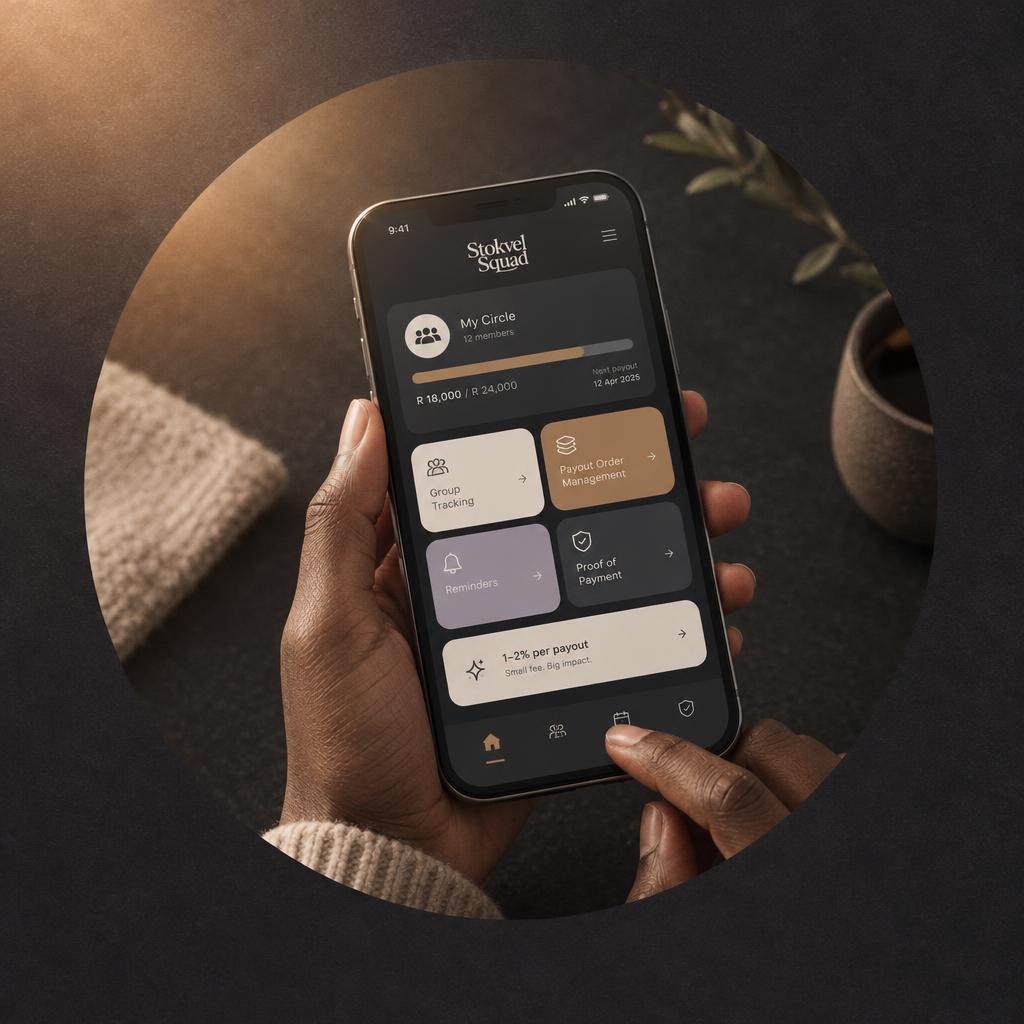
First, track the fixed monthly contributions from your group. Second, manage the payout order so it is clear which member receives the pot next.
Third, use reminders and keep proof of payment as the circle continues. The app supports the record-keeping around your group’s saving routine.
Explore the toolsFor your circle
Already saving together at work, or looking to start? Keep contributions and the payout order organised around the group, not just one person’s memory.
Use group tracking to follow contributions, and reminders to prompt members about payments. Keep the routine visible beyond a string of chat messages.
One member receives the pot each round. Payout-order management helps the circle keep track of who is next.
Keep proof of payment for reference when a contribution is questioned. Clear records give the group something to check, rather than relying on memory alone.